Abstract
Aphids cause biotic stress and vector diseases. However, wheat’s morphological and biochemical responses to aphid infestation are poorly studied. Our study evaluated the varietal behavior of durum wheat ( Triticum durum Desf) against Rhopalosiphum maidis (Homoptera: Aphididae) in laboratory conditions. We studied morphological trait variation (plant height [HP], flag leaf area [SFDF], leaf area [SF], spike length [LE], and beard length [LB]) and biochemical characteristics (chlorophyll, soluble sugars, and proline contents) of three varieties in Algeria: MBB, BOU, and GTA. MBB is the least affected, with a 13.34 % infestation rate. The heaviest infestation occurs during the heading stage. All morphological factors decreased in length or surface between control and infested samples. ANOVA showed significant variations for HP, LE, SFDF, and SF but not LB. Biochemical parameters decrease in GTA. In MBB, chlorophyll and soluble sugars decrease while proline increases. For BOU, soluble sugars decrease while chlorophyll and proline increase. Only soluble sugars showed a significant statistical variation between control and infested plants. HP is affected by aphid infestation, which is of higher significance for MBB. Proline content is affected in BOU and GTA. There is no significant variation between aphid infestation and chlorophyll, soluble sugars, and proline levels for MBB. The effect of R. maidis infestation is less important on MBB. HP, SFDF, SF, and LE are morphological selection criteria for R. maidis infestation resistance. Proline is a biochemical selection criterion. Genetic and molecular analyses are required to identify genes for programs that enhance durum wheat’s resistance to R. maidis infestations.
Introduction
Durum wheat production is limited by abiotic and biotic stresses that represent real yield constraints ( Turki et al., 2015 ). Aphids are among the best-known sources of biotic stress in wheat due to their high multiplication ability, dispersal capacity, and role as the main vectors of phytoviruses ( Harbaoui et al., 2008 ). ’During aphid attacks, the need to extract a significant amount of sap results in the secretion of honeydew that covers the wheat leaves on which black fungi, commonly referred to as sooty molds ( Hale et al., 2003 ), proliferate. The average percentage of wheat yield decline due to aphids’ direct effect is estimated at 10 to 13 % ( Dedryver, 2010 ).
Within the category of aphids that develop on wheat, the corn leaf aphid (CLA) Rhopalosiphum maidis (Homoptera: Aphididae) is distributed on a global scale ( Ortega, 1988 ). The CLA feeds on the young leaves of its host plant ( Blackman & Eastop, 2007 ), a common graminivorous species on various Poaceae ( Remaudiere et al., 1985 ; So et al., 2010 ). It has been reported as an important vector of multiple diseases ( Carena & Glogoza, 2004 ). In the USA, Hesler et al. (2005 ) and Shufran and Puterka (2011 ) have identified R . maidis in wheat. Macharia et al. (2016 ) found R . maidis in East Africa but in low density. Mahfoudhi and Najar (2013 ) mentioned that it stands out as the primary cereal pest in Tunisia; they reported that R. maidis is one of the vectors of the barley yellow dwarf (BYD) virus disease of wheat. In Algeria, R. maidis has been collected from numerous locations and on all cultivated cereal crops within the country, particularly Triticum aestivum and T. durum in the northern-east region ( Kellil, 2019 ; Kellil et al., 2020; Laamari et al., 2009 ). According to Saharaoui et al. (2015 ), the occurrence of this aphid on wheat is towards the end of March. Belkahla and Lapierre (2002 ) observed that R. maidis is one of Algeria's aphid vectors of the BYD.
The extent of aphid damage depends on the duration and quantity of aphid in the plant for each stage of its growth and its sensitivity to aphid infestation ( Dedryver, 2010 ). The resistance mechanism of winter wheat against the grain aphid involves antibiosis ( Ciepiela, 1989 ). The free amino acid content is related to the high cultivar resistance. For example, the infestation impact of the Russian wheat aphid (RWA), Diuraphis noxia , on biochemical parameters of wheat-induced changes in proline content, which contribute to the development of resistance ( Van der Westhuizen & Pretorius, 1995 ). Furthermore, aphids cause leaf discoloration and deformation (Dedryver, 2010). Mirik et al. (2007 ) mentioned that the responses of plants under RWA stress combine developmental, morpho-physiological, and biochemical reactions. Riedell and Blackmer (1999 ) noted that the feeding of RWA and Schizaphis graminum reduces wheat’s chlorophyll, dry weight , and leaf area.
Otherwise, the impact of R. maidis on wheat has been poorly studied in Algeria, as in North Africa. Despite the significant yield losses in durum wheat caused by aphid damage and the proven ability of some varieties to cope with pests, particularly aphids, little investigations have been carried out on this aspect, especially for local varieties ( Bousba et al. 2013 ; Harbaoui et al. 2008 ; Laamari et al. 2009 ).
This study aims to evaluate the varietal behavior of durum wheat towards R. maidis infestation. The study was conducted in laboratory conditions and focused on the impact of R. maidis infestation on the three most widely grown durum wheat varieties in Algeria: GTA/dur, Boussalem, and Mohamed Ben Bachir. Knowing that the last variety is of local selection, our objective is to compare the effect of the aphid infestation on a diverse range of morphological and biochemical characteristics of a local variety with the improved ones. The results of this study could offer improved guidance for selecting the most suitable varieties that demonstrate higher resistance against R. maidis .
Materials and Methods
| Blocks | Varieties | ||
| Block 1 | BOUt | GTA3 | MBB1 |
| Block 2 | MBBt | GTA1 | BOU1 |
| Block 3 | BOU4 | MBB4 | GTA2 |
| Block 4 | MBB3 | GTA4 | BOU3 |
| Block 5 | GTAt | MBB2 | BOU2 |
Experimental Design
The laboratory experiment started on July 14, 2013, and involved sowing in 5 kg pots with a rate of 20 seeds/pot. Sown seeds were from the cooperative of cereals and pulses of Batna (CCLS). They received regular irrigation every alternate day in an ambient temperature between 21 °C and 35 °C. The pots were placed according to a block randomization experimental design ( Trouche et al., 2001 ); it involved three levels corresponding to three distinct varieties: Mohamed Ben Bachir (MBB; pedigree: local selection; crossing: INRA Algeria), GTA/dur (GTA; Gaviota durum : Crane/4/PolonicumPI185309//T.glutin en/2* Tc60/3/Gll; CIMMYT-ICARDA), and Boussalem (BOU; Heider/Martes/Huevos de Oro. ICD-414; CIMMYT-ICARDA) ( Kirouani et al., 2019 ). In Algeria, GTA had the highest yield with an average of 19.58 q/ha; MBB was less productive with an average of 9.9 q/ha, and BOU intermediately with 14.7q/ha (Kirouani et al., 2019). Five blocks were dedicated to each of the three studied varieties, corresponding to four replications “1 to 4” and a control sample “t” ( Table 1 ).
Table 1 Representation of the experimental design applied during the study of the varietal behavior of durum wheat toward Rhopalosiphum maidis (Aphididae) in the laboratory Blocks Varieties Block 1 BOUt GTA3 MBB1 Block 2 MBBt GTA1 BOU1 Block 3 BOU4 MBB4 GTA2 Block 4 MBB3 GTA4 BOU3 Block 5 GTAt MBB2 BOU2 BOU: Boussalem; GTA: GTA/dur; MBB: Mohamed Ben Bachir; t: control Source: Prepared by the authors.
| Blocks | Varieties | ||
| Block 1 | BOUt | GTA3 | MBB1 |
| Block 2 | MBBt | GTA1 | BOU1 |
| Block 3 | BOU4 | MBB4 | GTA2 |
| Block 4 | MBB3 | GTA4 | BOU3 |
| Block 5 | GTAt | MBB2 | BOU2 |
Artificial Rhopalosiphum maidis Infestation
Artificial infestation of plants by aphids was carried out on August 4, 2013, at the 3-to-4-leaves stage. Knowing that the corn aphid reproduces asexually (parthenogenesis) and produces several generations per year, two adult aphids were delicately placed in the armpit of the leaves of each plant. The pots housing the cultivated plants were covered with muslin cloth to prevent other species’ influence and separate blocks. The first inoculated aphids were collected from live individuals collected in the field in the Batna region (4° to 7° E and 35° to 36° N). Afterward, a rearing of R. maidis was performed in the laboratory on a pot reserved for this purpose.
Aphid counts on the infested plants were conducted at intervals of ten days to monitor the evolution of R. maidis populations on infested plants ( Basky et al., 2001 ). The number of adult aphids on ten plants per pot, collected randomly, was recorded for every plant separately.
Measurement of Morphological and Biochemical Parameters
The morphological parameters measured were:
Plant height (HP in cm) from the tillering plate until the emergence of spike outlines ( Sassi & Boubaker, 2006 ); Spike length (LE in cm) at the mature stage, excluding the spike beard ( Sassi et al., 2012 ); Beard length (LB in cm) from the top of the terminal spikelet to the mature beard top ( Sassi et al., 2012 ); Leaf area (SF in cm 2 ); Flag leaf area (SFDF in cm 2 ) calculated according to the formula described by Spagnoletti Zeuli and Qualset (1990 ): Leaf surface = L * l * 0.7149, where (L) is the leaf length in cm and (l) is the leaf width in cm. We considered five replicates for each variety across all the measured parameters.
The biochemical parameters measured were chlorophyll, soluble sugars, and proline. Chlorophyll is determined by Mackinney’s (1941 ) method, which consists of putting 100 mg of cut leaves in black boxes with a mixture of acetone and ethanol (75 % and 25 %, respectively) for 48 hours. We read the optical solution densities using a spectrophotometer at two wavelengths, 645 nm and 663 nm, after calibrating the instrument with a control solution (75 % acetone + 25 % ethanol). The total chlorophyll (Chl.total) was calculated using Arnon’s (1949 ) formula: Chl.total = (0.00802 * OD663) + (0.0202 * OD645) mg/ml, where OD is optical density.
Soluble sugars were determined by the method described by Dubois et al. (1956 ). This method consists of taking 100 mg of the plant material into test tubes and adding 2 ml of 80 % ethanol for sugar extraction. This mixture was left at room temperature for 48 hours in the dark. During the determination process, the total alcohol was evaporated by placing test tubes in a water bath at 70 °C. After cooling, 20 ml of distilled water was added to the extract. In test tubes, 1 ml of the extract and 1 ml of 5 % phenol solution were added, ensuring thorough mixing. Finally, 2 ml of concentrated sulfuric acid H 2 SO 4 was added, obtaining a yellow-orange solution. The test tubes were placed in an ice bath, left for 25 min, and then read with a spectrophotometer at wavelengths of 490 nm. Concentrations were calculated using the equation derived from the calibration curve.
Proline was measured using the technique described by Monneveux and Nemmar (1986 ), which consists of placing 100 mg of fresh foliar material from each replicate into test tubes and then adding 2 ml of 40 % methanol. Tubes were covered to prevent alcohol from evaporating and brought to boiling in a water bath at 85 °C for 60 minutes. After cooling, 1 ml of the extract was taken from each tube and placed in new tubes into which 1 ml of acetic acid (CH 3 COOH) was added. In each tube, we added 1 ml of a mixture containing 120 ml of distilled water, 300 ml of acetic acid, 80 ml of orthophosphoric acid (H 3 PO 4 density 1.7), and 25 mg of ninhydrin. The mixture was boiled for 30 minutes, resulting in a red solution. Once the solution cooled, the chromatophore was extracted using 5 ml of toluene. After vortex agitation, the mixture was separated into two phases. The upper phase containing the chromatophore was removed, and 5 mg of oxidized sodium sulfate (Na 2 SO 4 ) was added using a spatula to eliminate the water. The sample optical density was recorded using a spectrophotometer at 528 nm wavelength, corresponding to its maximum absorption. Concentrations were calculated using the equation deduced from the calibration curve.
Statistical Analysis
The infestation rate (IR %) of R. maidis was calculated by the percentage of individuals who had aphids in a given stage relative to the total number of individuals collected throughout the study period: IR% = n x * 100/N. Where n is the individual number in a given stage x, and N is the total number of collected individuals. Means and standard deviations of the considered morphological and biochemical parameters of the three varieties of durum wheat were represented by boxplots.
To evaluate the variation of the IR of R. maidis for the three varieties according to their phenological stages, a one-way non-parametric ANOVA followed by Kruskal Wallis posthoc tests was performed ( P ˂ 0.05). We applied the same ANOVA to test the studied varieties' morphological and biochemical parameter variation between control and infested plants. We infested plants with an interaction analysis of the individual numbers of R. maidis and the durum wheat varieties . Statistical tests were performed using the computing environment R version ( R Development Core Team, 2018 ).
Results and Discussion
| Df | 1 | 1 | 1 | |
| Plant height HP (cm) | F | 15.207 | 4.2334 | 17.3760 |
| P | 0.0079 | 0.0853 | 0.0058 | |
| Leaf area of last leaf SFDF (cm 2 ) | F | 32.417 | 1.0832 | 44.731 |
| P | 0.0047 | 0.3567 | 0.0025 | |
| Leaf area SF (cm 2 ) | F | 9.6095 | 6.4102 | 111.85 |
| P | 0.0362 | 0.0645 | 0.0004 | |
| Spike length LE (cm) | F | 12.845 | 5.9326 | 1.08 |
| P | 0.0116 | 0.0507 | 0.3388 | |
| Beard length LB (cm) | F | 1.8861 | 1.1796 | 0.0928 |
| P | 0.2188 | 0.3191 | 0.771 |
| Df | 1 | 1 | 1 | |
| Chlorophyll (mg/ml) | F | 2.1316 | 2.5714 | 1.0909 |
| P | 0.2181 | 0.1841 | 0.3552 | |
| Soluble sugars (mg/100mg) | F | 0.5413 | 10.459 | 2.4634 |
| P | 0.5027 | 0.0319 | 0.1916 | |
| Proline (µg/100 mg) | F | 0.3262 | 1.5334 | 0.9873 |
| P | 0.5985 | 0.2833 | 0.3766 |
| Leaf area of last leaf SFDF (cm 2 ) | F | 0.0682 | 1.5939 | 0.814 |
| P | 0.8374 | 0.2354 | 0.5327 | |
| Leaf area SF (cm 2 ) | F | 2.2179 | 1.4107 | 0.5982 |
| P | 0.1673 | 0.4455 | 0.4572 | |
| Spike length LE (cm) | F | 0.1586 | 0.3062 | 0.2876 |
| P | 0.7289 | 0.6356 | 0.6454 | |
| Beard length LB (cm) | F | 0.1751 | 0.0641 | 0.1451 |
| P | 0.7163 | 0.8238 | 0.7399 |
| Df | 1 | 1 | 1 | |
| Chlorophyll (mg/ml) | F | 3.2932 | 1.5217 | 2.4159 |
| P | 0.0996 | 0.2456 | 0.1512 | |
| Soluble sugars (mg/100mg) | F | 1.1845 | 5.1647 | 0.0811 |
| P | 0.3020 | 0.2639 | 0.8234 | |
| Proline (µg/100 mg) | F | 5.7236 | 2502.3 | 2.6552 |
| P | 0.0378 | 0.01272 | 0.3504 |
Evolution of R. maidis Infestation on Durum Wheat
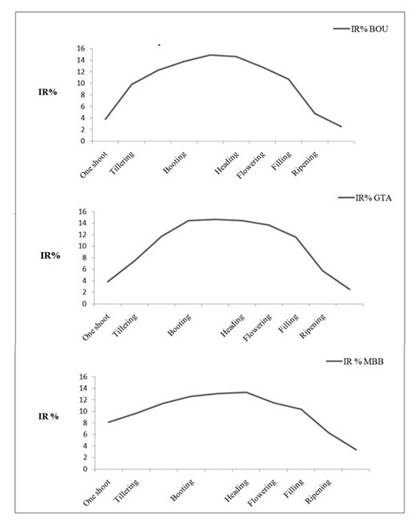
The IR % of R. maidis in the three studied durum wheat varieties under laboratory conditions increases overall between the 3-leaf to the heading stages, then decreases considerably until the end of the test. The three studied varieties are the most infested during ripening, particularly at the heading and flowering stages. The maximum IR % of R. maidis shows that MBB is the less affected variety, with 13.34 % ( Figure 1 ). The variance analysis reveals a highly significant variation of IR % for the BOU and GTA varieties ( P = 0.005; P = 0.007) and a substantial variation for GTA ( P = 0.02).
The infestation rate of the three studied varieties by R. maidis is less important in the MBB variety compared to BOU and GTA. The R. maidis IR% depends on the variety of durum wheat. The varietal effect plays a vital role in the outlook and dynamics of R. maidis . The ingestion rate of insects changes with plant variety ( Hale et al., 2003 ). Genetic resistance to D. noxia is identified in wheat, and several resistance genes are available to enhance cultivars ( Linscott et al., 2001 ).
The highest infestation levels among the three studied varieties occurred during the heading and flowering stages. The development stage of the host plant constitutes another parameter impacting the aphid infestation rate. Dedryver and Di Pietro (1986 ) studied the impact of different winter wheat varieties on the population dynamics of Sitobion avenae , Metopolophium rhodium , and R. padi in field conditions. They found a notable significant difference after the heading stage. The experiment conducted by Girma et al. (1993 ) showed that the growth stage preceding heading is susceptible to D. noxia infestation in wheat. The early part of the dough stage of a cereal grain is unfavorable for aphid multiplication and persistence ( Harbaoui et al., 2008 ). According to Turpeau-Ait et al. (2011 ), the extent of aphid damage is determined by the presence and quality of the aphid on the plant, the growth stage of the plants, and their sensitivity degree.
Figure 1 Evolution of R. maidis infestation rates for three varieties of durum wheat according to the phenological stages of the host plant. (Varieties: BOU = Boussalem, GTA = GTA/dur, and MBB = Mohamed Ben Bachir; t: control; IR%: infestation rate) / Source: Prepared by the authors.
Variation of Plant Morphological Parameters
The morphological parameters show variations within the three durum wheat varieties and between the control and aphid-infested plants. The following findings are noted:
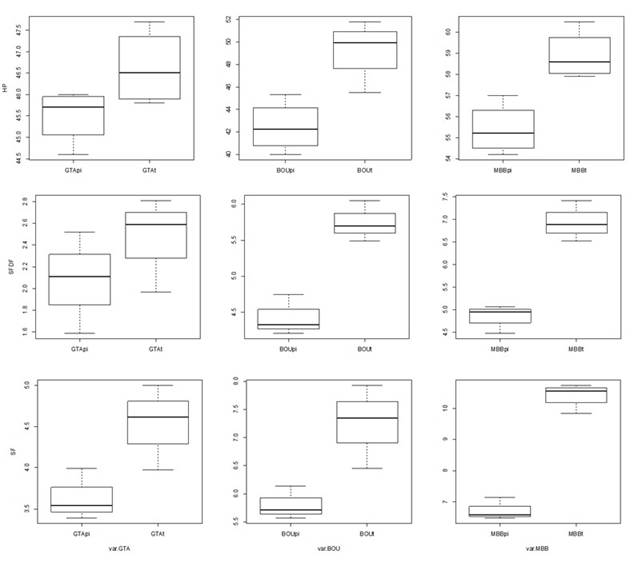
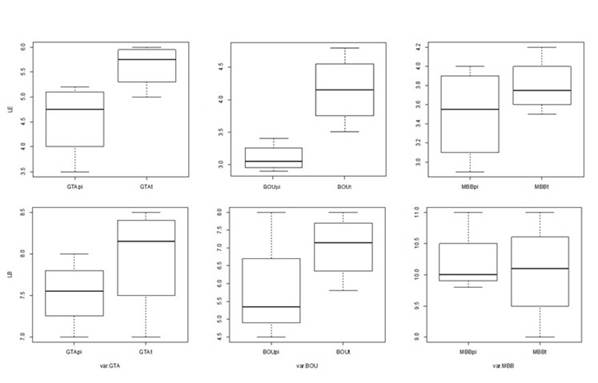
Plant height (HP): The MBBt variety registers the highest average value (58.90 ±1.16 cm), while the BOUi variety had the lowest height (42.45 ± 2.26 cm). Compared to the infested ones, control plants achieved the greatest heights in all three varieties ( Figure 2 ). Flag leaf area (SFDF): MBBt variety shows the highest surface (6.94 ± 0.45 cm 2 ). The lowest value is noted for the GTAi variety, with (2.07 ± 0.47 cm 2 ). High values represent control plants compared to infested plants ( Figure 2 ) among the three studied varieties. Leaf area (SF): MBBt variety shows the highest value (10.38 ± 0.48cm 2 ). The GTAi variety is scored by the smallest area (3.64 ± 0.31 cm 2 ). Control plants in all three studied varieties show higher values than infested ones ( Figure 2 ). Spike length (LE): The GTAt variety has the highest average value (5.62 ± 0.45 cm), while the lowest length is noted for the BOUi variety (3.10 ± 0.22 cm). Control plants have higher values than infested plants in all varieties ( Figure 3 ). Beard length (LB): The MBBi variety has the highest average value (10.20 ± 0.54 cm), while BOUi is the variety with the smallest beard length (5.80 ± 1.52cm). The measured values for control plants are also higher than those of infested plants, except in the MBB variety, where there is a slight increase in LB of infested plants ( Figure 3 ).
The ANOVA analysis shows significant variations among the four measured variables (HP, SFDF, SF, and LE) and no significance for LB. The variance analysis of plant height reveals a highly significant difference between control and infested plants for the BOU and MBB varieties ( P = 0.007; P = 0.005). Meanwhile, no significant differences are detected for the GTA variety. The same findings are noted for SFDF variation, which is very highly significant for the MBB variety (pi and t) ( P = 0.0004), significant in the case of the BOU variety ( P = 0.036), and not significant for the GTA variety. For LE, only the BOU variety shows a considerable variation ( P = 0.0116). The LB variation for the three studied varieties is insignificant ( Table 2 ).
Figure 2 Boxplots showing the variation of plant height (HP in cm), leaf area of last leaf (SFDF in cm 2 ), and leaf area (SF in cm 2 ) of three durum wheat varieties. (Varieties: BOU = Boussalem, GTA = GTA/dur, and MBB = Mohamed Ben Bachir; t: control; pi: infested plants). / Source: Prepared by the authors.
Figure 3 Boxplots showing the variation of spike length (LE in cm) and beard length (LB in cm) of three durum wheat varieties. (Varieties: BOU = Boussalem, GTA = GTA/dur, and MBB = Mohamed Ben Bachir; t: control; pi: infested plants). Source: Prepared by the authors.
The MBB variety is noted by the highest “plant height” values compared to the other two varieties. This would be due to its varietal characteristics. Many authors stressed that high plant height and spike length values are recorded in the MBB variety ( Aggoun et al., 2006 ). Furthermore, Kirouani et al. (2019 ) classify MBB among the group of varieties with high straw, while BOU and GTA are in a group of semi-dwarf varieties. Plant height is a relevant trait for aphid infestation, with a preference for semi-dwarf varieties.
The variation between the control and the infested plants is significant for HP, SFDF, SF, and LE. Control plants are represented by higher morphological values than infested plants due to the growth disruption of the latter by aphids. D. noxia feeding on wheat plants causes a significant reduction in plant height ( Girma et al., 1993 ). Aphid infestation caused a significant decrease in plant height and fresh and dry weight compared with non-infested wheat plants ( Macedo et al., 2003 ). Backoulou et al. (2011 ) note that RWA causes leaf chlorosis and leaf rolling, damaging plant foliage and affecting productivity. The high degree of aphid infestation results in stunted growth and reduced productivity of the plants and can completely stop growth ( Harbaoui et al., 2008 ). Aphids can directly impair photosynthesis by causing physical damage, blocking light, and inducing plant stress responses ( Al-Khatib & Paulsen, 1990 ). Sooty mold on leaves induces a reduction of photosynthesis, inhibiting plant growth and productivity ( Leroy et al., 2009 ).
Table 2 Analysis results of testing the variation in morphological parameters of three durum wheat varieties concerning aphid infestation by Rhopalosiphum maidis . (Varieties: BOU = Boussalem, GTA = GTA/dur, and MBB = Mohamed Ben Bachir; t: control; pi: plant infested by aphid) Source of variation BOUt ( BOUpi GTAt ( GTApi MBBt ( MBBpi Df 1 1 1 Plant height HP (cm) F 15.207 4.2334 17.3760 P 0.0079 0.0853 0.0058 Leaf area of last leaf SFDF (cm 2 ) F 32.417 1.0832 44.731 P 0.0047 0.3567 0.0025 Leaf area SF (cm 2 ) F 9.6095 6.4102 111.85 P 0.0362 0.0645 0.0004 Spike length LE (cm) F 12.845 5.9326 1.08 P 0.0116 0.0507 0.3388 Beard length LB (cm) F 1.8861 1.1796 0.0928 P 0.2188 0.3191 0.771 Source: Prepared by the authors.
| Df | 1 | 1 | 1 | |
| Plant height HP (cm) | F | 15.207 | 4.2334 | 17.3760 |
| P | 0.0079 | 0.0853 | 0.0058 | |
| Leaf area of last leaf SFDF (cm 2 ) | F | 32.417 | 1.0832 | 44.731 |
| P | 0.0047 | 0.3567 | 0.0025 | |
| Leaf area SF (cm 2 ) | F | 9.6095 | 6.4102 | 111.85 |
| P | 0.0362 | 0.0645 | 0.0004 | |
| Spike length LE (cm) | F | 12.845 | 5.9326 | 1.08 |
| P | 0.0116 | 0.0507 | 0.3388 | |
| Beard length LB (cm) | F | 1.8861 | 1.1796 | 0.0928 |
| P | 0.2188 | 0.3191 | 0.771 |
Variation of Plant Biochemical Parameters
The results related to the studied biochemical parameters are reported below:
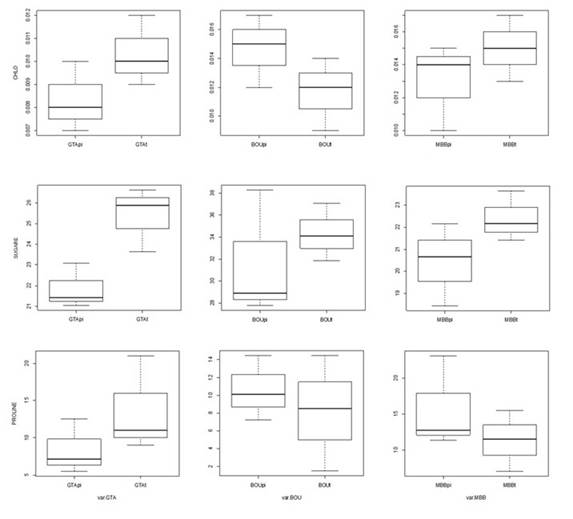
Total chlorophyll: The MBBt variety contains the highest average chlorophyll content (0.015 ± 0.0020 mg/ml), while the lowest content is noted in the GTAi variety (0.0083 ± 0.0016 mg/ml). Control plants have higher chlorophyll levels than infested plants, except in the BOU variety, where chlorophyll is higher in infested plants ( Figure 4 ). Soluble sugars: The BOUt variety has the highest sugar content (34.35 ± 2.62 mg/100 mg), while the MBBi variety has the lowest (20.42 ± 1.88 mg/100 mg). The control plants have the highest sugar levels compared to the infested plants in the three studied varieties ( Figure 4 ). Proline: The highest proline value is recorded in the MBBi variety (13.82 ± 2.48 μg/100 mg), while the lowest is found in the GTAi variety (7.17 ± 3.51 μg/100 mg). Proline content is higher in infested plants of the MBB and BOU varieties. Conversely, control plants show a higher value in the GTA variety ( Figure 4 ).
Figure 4 Boxplots showing the variation of chlorophyll (CHLO in mg/ml), soluble sugars (SUGAR in mg/100mg), and proline (PROLINE in µg/100 mg) content of three varieties of durum wheat infested with Rhopalosiphum maidis . (Varieties: BOU = Boussalem, GTA = GTA/dur, and MBB = Mohamed Ben Bachir; t: control; pi: infested plants) Source: Prepared by the authors.
The variance analysis for the variation in the three biochemical parameters studied shows that only the variation in sugar levels in GTA is statistically significant ( Table 3 ).
Our results show that aphids affect the biochemical parameters of wheat, particularly the chlorophyll, soluble sugars, and proline contents. Compared to other varieties, MBB displayed a higher level of chlorophyll. Its content is more critical in controlling plants. The quantity of chlorophyll in leaves can be influenced by several environmental factors, such as saline stress, water stress, and aphid infestation ( Bousba et al., 2013 ; El-Iklil et al., 2002 ; Hikosaka et al., 2006 ; Nana et al., 2009 ). Linscott et al. (2001 ) highlighted that the damages inflicted by Diuraphis noxia on wheat plants cause a decrease in chlorophyll content. Aphid feeding causes a significant reduction of chlorophyll, leaf rolling, and chlorosis compared to non-infested plants ( Macedo et al., 2003 ).
Table 3 ANOVA results of testing the variation of biochemical parameters of three durum wheat varieties experimentally infested with the Rhopalosiphum maidis aphid. (Varieties: BOU = Boussalem, GTA = GTA/dur, and MBB = Mohamed Ben Bachir; t: control; pi: infested plants) Source of Variation BOUt ( BOUpi GTAt ( GTApi MBBt ( MBBpi Df 1 1 1 Chlorophyll (mg/ml) F 2.1316 2.5714 1.0909 P 0.2181 0.1841 0.3552 Soluble sugars (mg/100mg) F 0.5413 10.459 2.4634 P 0.5027 0.0319 0.1916 Proline (µg/100 mg) F 0.3262 1.5334 0.9873 P 0.5985 0.2833 0.3766 Source: Prepared by the authors.
The level of soluble sugars is higher in BOU and lower in the MBB variety. Kirouani et al. (2019 ) also found that MBB has a deficient level of soluble sugars. This finding suggests that aphids prefer varieties with high sugar levels. Poessel et al. (2005 ), studying the impact of infestation on the metabolic profile of peach varieties apexes susceptible and resistant to green aphids ( Myzus persicae ), have shown a decrease in the content of most sugars, organic acids, and some amino acids (glutamine, threonine). Indeed, sugars are the only essential carbon source for aphid respiration and growth ( Douglas & Van Emden, 2007 ). The variation of soluble sugar rate between infested and control plants was only significant in the GTA variety. This variation may be due to the dietary preferences of the aphids. The sugar in honeydew excretion originates from vegetal sugars (sucrose, fructose, glucose, and maltose) and complex sugar synthetics by aphids ( Leroy et al., 2009 ).
Moreover, MBB shows the highest proline level among the three studied varieties. This converges with the results reported by Sassi et al. (2012 ), who found that the proline content in durum wheat varieties ranged between 18 and 30 mg/100 g fresh matter within the same species. The increase in proline could play a role in the plant’s defense mechanism against aphids. Proline is an osmoticum that accumulates as soon as the plant is under stress, helping to maintain osmotic balance and mitigate the impacts of stress on the plant’s physiological processes (Sassi et al., 2012). Keyvan (2010 ) studied the effect of drought stress on proline, chlorophyll, and soluble sugar in bread wheat cultivars, showing a significant decrease in chlorophyll and an increase in proline level. Furthermore, he observed a positive correlation between soluble sugar levels and proline rates. The phloem sap that aphid feeds contains carbohydrates and amino acids ( Hale et al., 2003 ). Aphid performance is linked to the flow of amino acids through their bodies (Hale et al., 2003).
Otherwise, a significant variation is only noted in plant height ( R. maidis vs all varieties). The remaining morphological traits show insignificant variation. Girma et al. (1993 ) observed that D. noxia infestation significantly decreased plant height, shoot weight, and spikes, particularly during the heading stage. Significant variation was shown in proline content within the interaction of R. maidis * BOU and R. maidis * GTA varieties. This result suggested the potential role of this component in enhancing plant defense mechanisms against stress.
| Df | 1 | 1 | 1 | |
| Chlorophyll (mg/ml) | F | 2.1316 | 2.5714 | 1.0909 |
| P | 0.2181 | 0.1841 | 0.3552 | |
| Soluble sugars (mg/100mg) | F | 0.5413 | 10.459 | 2.4634 |
| P | 0.5027 | 0.0319 | 0.1916 | |
| Proline (µg/100 mg) | F | 0.3262 | 1.5334 | 0.9873 |
| P | 0.5985 | 0.2833 | 0.3766 |
The Overall Incidence of R. maidis in the Durum Wheat Varieties
The variance analysis of R. maidis * variety interaction reveals significant differences in plant height among the three studied varieties: very highly significant ( P = 0.0006447) in the case of R. maidis * MBB, highly significant ( P = 0.001636) for R. maidis * BOU, and significant ( P = 0.01042) for R. maidis * GTA. However, the variation in the other morphological parameters is statistically insignificant ( Table 4 ).
Table 4 ANOVA results of testing the variation in morphological parameters of three durum wheat varieties studied according to Rhopalosiphum maidis infestation. (Varieties: BOU = Boussalem; GTA = GTA/dur and MBB = Mohamed Ben Bachir) Source of Variation R. maidis ( BOU R. maidis ( GTA R. maidis ( MBB Df 1 1 1 Plant height HP (cm) F 8 .7372 15.125 19.069 P 0.0104 0.0016 0.0006 Leaf area of last leaf SFDF (cm 2 ) F 0.0682 1.5939 0.814 P 0.8374 0.2354 0.5327 Leaf area SF (cm 2 ) F 2.2179 1.4107 0.5982 P 0.1673 0.4455 0.4572 Spike length LE (cm) F 0.1586 0.3062 0.2876 P 0.7289 0.6356 0.6454 Beard length LB (cm) F 0.1751 0.0641 0.1451 P 0.7163 0.8238 0.7399 Source: Prepared by the authors.
We noted a significant difference in proline content for biochemical parameters within the interaction R. maidis * BOU ( P = 0.0378) and R. maidis * GTA ( P = 0.01272). Still, R. maidis * variety interactions in the three varieties were statistically insignificant for chlorophyll and soluble sugars ( Table 5 ).
Table 5 ANOVA results of testing the variation in biochemical parameters of three cultivated durum wheat varieties and the impact of R. maidis on these varieties. (Varieties: BOU = Boussalem; GTA = GTA/dur and MBB = Mohamed Ben Bachir) Source of Variation R. maidis ( BOU R. maidis ( GTA R. maidis ( MBB Df 1 1 1 Chlorophyll (mg/ml) F 3.2932 1.5217 2.4159 P 0.0996 0.2456 0.1512 Soluble sugars (mg/100mg) F 1.1845 5.1647 0.0811 P 0.3020 0.2639 0.8234 Proline (µg/100 mg) F 5.7236 2502.3 2.6552 P 0.0378 0.01272 0.3504 Source: Prepared by the authors.
Our results highlight a varietal effect of the aphid impact on infested durum wheat plants’ morphological and biochemical parameters under laboratory conditions. Thus, the morphological traits showing the durum wheat resistance to R. maidis were the leaf area, plant height, and spike length. Biochemical traits were the rate of soluble sugars and proline. The MBB variety was slightly less infested compared to the two other varieties. Among morphological and biochemical characteristics of the MBB variety, those that showed more resistance potential against R. maidis were the high height of the plant, low rate of soluble sugars, and high level of proline. Hale et al. (2003 ) showed that among several studied species of grass, Arrhenatherum elatius was the least favored host plant for R. padi. Van der Westhuizen and Pretorius (1995 ) described metabolically resistant wheat varieties able to survive the stress caused by RWA infestation, as well as sensitive varieties that are susceptible to such stress. Also, Havlíčková (1987 ) shows that varieties infestation of winter wheat by Metopolophium dirhodum significantly decreased leaf area and increased amino acid content. Direct plant defense against herbivores is done by physical barriers (spines, waxes) or biochemical barriers (secondary metabolites and defense-specific proteins; Arimura et al., 2005 ).
The results of our research argue in favor of further studies of the morphological and biochemical responses of durum wheat to Rhopalosiphum maidis infestation, in particular by conducting field experiments, taking into account other morphological parameters linked to the growth and metabolism of the host plant. Genetic and molecular studies on the studied varieties are needed to detect resistance genes, which can be used to improve durum wheat resistance to CLA infestations.
| Leaf area of last leaf SFDF (cm 2 ) | F | 0.0682 | 1.5939 | 0.814 |
| P | 0.8374 | 0.2354 | 0.5327 | |
| Leaf area SF (cm 2 ) | F | 2.2179 | 1.4107 | 0.5982 |
| P | 0.1673 | 0.4455 | 0.4572 | |
| Spike length LE (cm) | F | 0.1586 | 0.3062 | 0.2876 |
| P | 0.7289 | 0.6356 | 0.6454 | |
| Beard length LB (cm) | F | 0.1751 | 0.0641 | 0.1451 |
| P | 0.7163 | 0.8238 | 0.7399 |
| Df | 1 | 1 | 1 | |
| Chlorophyll (mg/ml) | F | 3.2932 | 1.5217 | 2.4159 |
| P | 0.0996 | 0.2456 | 0.1512 | |
| Soluble sugars (mg/100mg) | F | 1.1845 | 5.1647 | 0.0811 |
| P | 0.3020 | 0.2639 | 0.8234 | |
| Proline (µg/100 mg) | F | 5.7236 | 2502.3 | 2.6552 |
| P | 0.0378 | 0.01272 | 0.3504 |
Conclusion
The impact of aphids on the three studied varieties of durum wheat depends on the phenological stages of the host plant, and its highest infestation is recorded during the heading stage. Statistical analysis has shown highly significant differences between control samples and infested ones. These differences appear in various morphological parameters (HP, SFDF, SF, and LE) and soluble sugars as biochemical parameters. The presence of R. maidis in the three studied varieties is statistically significant, particularly in HP and proline traits.
Consequently, we can consider HP, SFDF, SF, and LE as morphological characteristics suitable for selection as indicators of plant resistance against R. maidis infestation. Proline is a biochemical selection criterion enhancing a better defense against this aphid.
High height, considerable spike length, high rates of chlorophyll and proline, and low rate of soluble sugars indicate that the MBB variety is more resistant to aphids, especially R. maidis , despite its effect on BOU and GTA varieties. The impact of R. maidis infestation on the MBB variety is less significant compared to the other two varieties, whether considering morphological or biochemical parameters. Our overall global findings consolidate that the MBB variety, the only locally selected but not very productive, shows greater resistance to R. maidis infestation. Consequently, it becomes imperative to conduct genetic and molecular studies on the MBB variety and the other studied varieties to detect, identify, and characterize the resistance genes, which can be used in breeding programs to enhance resistance.
Referencias
- Aggoun, A., Benmahammed, K., & Dekhili, M. (2006). Effets des facteurs environnementaux sur le poids des grains dans cinq populations algériennes de blé dur (
Triticum durum Desf.).Cahiers Agricultures ,15 (1), 425-431. https://revues.cirad.fr/index.php/cahiers-agricultures/article/view/30602 - Al-Khatib, K., & Paulsen, G. M. (1990). Photosynthesis and Productivity during High-Temperature Stress of Wheat Genotypes from Major World Regions.
Crop Science ,30 , 1127-1132. https://doi.org/10.2135/cropsci1990.0011183X003000050034x - Arimura, G., Kost, C., & Boland, W. (2005). Herbivore-induced, indirect plant defences.
Biochimica et Biophysica Acta (BBA) ,1734 , 91-111. https://doi.org/10.1016/j.bbalip.2005.03.001 - Arnon, D. I. (1949). Copper enzymes in chloroplasts. Phenol oxidase in
Beta vulgaris .Plant Physiology ,24 , 1-15. https://doi.org/10.1104/pp.24.1.1 - Backoulou, G. F., Elliott, N. C., Giles, K., Phoofolo, M., Catana, V., Mirik, M., & Michels, J. (2011). Spatially discriminating Russian wheat aphid induced plant stress from other wheat stressing factors.
Computers and Electronics in Agriculture ,78 , 123-129. https://doi.org/10.1016/j.compag.2011.06.005 - Basky, Z., Hopper, Keith R., Jordaan, J., & Saayman, T. (2001). Biotypic differences in Russian wheat aphid (
Diuraphis noxia ) between South African and Hungarian agro-ecosystems.Agriculture, Ecosystems & Environment ,83 , 121-128. https://doi.org/10.1016/S0167-8809(00)00245-0 - Belkahla, H., & Lapierre, H. (2002). Analyse par ELISA et immunocapture-RT-PCR des virus associés à la jaunisse nanisante de l’orge (BYD) sur blé tendre.
Sciences & Technologie , Numéro Spécial-D, 5-9. https://revue.umc.edu.dz/c/article/view/1848 - Blackman, R. L., & Eastop, V. F. (2007). Taxonomic issues. In H. F. Van Emden & R. Harrington (Eds.),
Aphids as Crop Pests (pp. 1-29). CABI. https://doi.org/10.1079/9780851998190.0001 - Bousba, R., Djekoun, A., Duraa, S., & Ykhlef, N. (2013). Caractérisation moléculaire et association Marqueur SSR Phénotype pour la tolérance au stress hydrique chez le blé dur (
Triticum Durum Desf).European Scientific Journal , 9(12), 186-201. https://eujournal.org/index.php/esj/issue/view/71 - Carena, M. J., & Glogoza, P. (2004). Resistance of maize to the corn leaf aphid: A review.
Maydica ,49 , 241-254. https://experts.umn.edu/en/publications/resistance-of-maize-to-the-corn-leaf-aphid-a-review - Ciepiela, A. (1989). Biochemical basis of winter wheat resistance to the grain aphid,
Sitobion avenae .Entomologia Experimentalis et Applicata ,51 , 269-275. https://doi.org/10.1111/j.1570-7458.1989.tb01238.x - Dedryver, C. A. (2010). Les pucerons : biologie, nuisibilité, résistance des plantes. In
Book of abstract of Actes des Journées Techniques à Angers Fruits & Légumes Biologiques (pp. 23-26). ITAB. - Dedryver, C. A., & Di Pietro, J. P. (1986). Biologie des pucerons des céréales dans l’Ouest de la France. VI. - Etude comparative des fluctuations au champ des populations de
Sitobion avenae (F.),Metopolophium dirhodum (Wlk.) etRhopalosiphum padi (L.) sur différents cultivars de blé d’hiver.Agronomie , 6, 75-84. https://doi.org/10.1051/agro:19860106 - Douglas, A. E., & Van Emden, H. F. (2007). Nutrition and symbiosis. In H. F. Van Emden & R. Harrington (Eds.),
Aphids as Crop Pests (pp. 115-135). CAB international.. https://doi.org/10.1079/9780851998190.0115 - Dubois, M., Gilles, K. A., Hamilton, J. K., Rebers, P. T., & Smith, F. (1956). Colorimetric method for determination of sugars and related substances.
Analytical Chemistry ,28 , 350-356. https://doi.org/10.1021/ac60111a017 - El-Iklil, Y., Karrou, M., Mrabet, R., & Benichou, M. (2002). Effet du stress salin sur la variation de certains metabolites chez
Lycopersicon esculentum etLycopersicon sheesmanii .Canadian Journal of Plant Science ,82 , 177-183. https://doi.org/10.4141/P00-175 - Girma, M., Wilde, G. E., & Harvey, T. L. (1993). Russian wheat aphid (Homoptera: Aphididae) affects yield and quality of wheat.
Journal of Economic Entomology ,86 (2), 594-601. https://doi.org/10.1093/jee/86.2.594 - Hale, B. K., Bale, J. S., Pritchard, J., Masters, G. J., & Brown, V. K. (2003). Effects of host plant drought stress on the performance of the bird cherry-oat aphid,
Rhopalosiphum padi (L.): a mechanistic analysis.Ecological Entomology ,28 (6), 666-677. https://doi.org/10.1111/j.1365-2311.2003.00563.x - Harbaoui, H., Mezghani, K. M., Marrakchi, M., Makni, M., Makni, H. (2008). Étude morphologique et toxicologique des pucerons (Homoptères : Aphididae) des céréales en Tunisie.
Bulletin de la Société zoologique de France ,133 , 203-213. - Havlíčková, H. (1987). Behaviour and reproduction of cereal aphids in relation to changes in the content of water and free amino acids in wheat during the growing season.
Journal of Applied Entomology ,103 , 142-147. https://doi.org/10.1111/j.1439-0418.1987.tb00972.x - Hesler, L. S., Riedell, W. E., Langham, M. A. C., & Osborne, S. L. (2005). Insect Infestations, Incidence of Viral Plant Diseases, and Yield of Winter Wheat in Relation to Planting Date in the Northern Great Plains.
Journal of Economic Entomology ,98 , 2020-2027. https://doi.org/10.1093/jee/98.6.2020 - Hikosaka, K., Ishikawa, K., Borjigidai, A., Muller, O., & Onoda, Y. (2006). Temperature acclimation of photosynthesis: mechanisms involved in the changes in temperature dependence of photosynthetic rate.
Journal of Experimental Botany ,57 , 291-302. https://doi.org/10.1093/jxb/erj049 - Kellil, H. (2019).
Contribution à l’étude de la bio-écologie fonctionnelle des peuplements entomologiques inféodés aux agro-écosystèmes céréaliers dans la région du nord-est algérien (Sétif, Constantine) [Dissertation, Université Mohamed Khider]. - Kellil, H., Mohguen, K., & Si Bachir, A. (2020). Relationship between populations of
Coccinella septempunctata (Coleoptera: Coccinellidae) and the aphidian pests of cereals in the region of Setif (northeastern Algeria).IOBC-WPRS Bulletin ,151 , 28-34. - Keyvan, S. (2010). The effects of drought stress on yield, relative water content, proline, soluble carbohydrates and chlorophyll of bread wheat cultivars.
Journal of Animal and Plant Sciences , 8, 1051-1060. https://www.m.elewa.org/JAPS/2010/8.3/4.pdf - Kirouani, A., Kiar, R. O., Boukhalfoun, L., & Fellahi, Z. E. A. (2019). Caractérisation de quelques variétés Algériennes de blé dur (
Triticum turgidum L. var.durum ) par le biais des marqueurs phénotypiques.Journal of Applied Biosciences ,142 , 14464-14477. https://www.ajol.info/index.php/jab/article/view/192243 - Laamari, M., Jousselin, E., & Coeur d’acier, A. (2009). Assessment of aphid diversity (Hemiptera: Aphididae) in Algeria: a fourteen-year investigation.
Faunistic Entomology ,62 , 73-87. https://popups.uliege.be/2030-6318/index.php?id=1272 - Leroy, P., Capella, Q., & Haubruge, E. (2009). L’impact du miellat de puceron au niveau des relations tritrophiques entre les plantes-hôtes, les insectes ravageurs et leurs ennemis naturels.
Biotechnologie, Agronomie, Société et Environnement ,13 (2), 325-334. https://popups.uliege.be/1780-4507/index.php?id=4171 - Linscott, T. M., Bosque-Perez, N. A., Schotzko, D. J., Kidwell, K. K., & Zemetra, R. S. (2001). Genetic control of Russian wheat aphid (
Diuraphis noxia ) resistance in wheat accession PI 47545.Euphytica ,121 , 31-35. https://doi.org/10.1023/A:1012003332713 - Macedo, T. B., Higley, L. G., Ni, X., & Quisenberry, S. S. (2003). Light activation of Russian wheat aphid-elicited physiological responses in susceptible wheat.
Journal of Economic Entomology ,96 , 194-201. https://doi.org/10.1093/jee/96.1.194 - Macharia, M., Tebkew, D., Agum, W., & Njuguna, M. (2016). Incidence and distribution of insect pests in rain-fed wheat in eastern Africa.
African Crop Science Journal ,24 , 149-155. https://doi.org/10.4314/acsj.v24i1.17S - Mackinney, G. (1941). Absorption of light by chlorophyll solutions.
Journal of Biological Chemistry ,140 , 315-322. https://doi.org/10.1016/S0021-9258(18)51320-X - Mahfoudhi, N., & Najar, A. (2013). Virologie en arboriculture fruitière et céréaliculture : 30 ans de recherche à l’INRAT.
Annales de l’INRAT ,86 , 168-179. - Mirik, M., Michels, G. J., Kassymzhanova-Mirik, S., & Elliott, N. C. (2007). Reflectance characteristics of Russian wheat aphid (Hemiptera: Aphididae) stress and abundance in winter wheat.
Computers and Electronics in Agriculture ,57 , 123-134. https://doi.org/10.1016/j.compag.2007.03.002 - Monneveux, P., & Nemmar, M. (1986). Contribution à l’étude de la résistance à la sécheresse chez le blé tendre (
Triticum aestivum L.) et chez le blé dur (Triticum durum Desf.) : étude de l’accumulation de la proline au cours du cycle de développement.Agronomie , 6, 583-590. https://doi.org/10.1051/agro:19860611 - Nana, R., Tamini, Z., & Sawadogo, M. (2009). Effets d’un stress hydrique intervenu pendant le stade végétatif et la phase de floraison chez le gombo.
Journal of Biological and Chemical Sciences , 3, 1161-1170. https://doi.org/10.4314/ijbcs.v3i5.51094 - Ortega, C. A. (1988).
Insectes ravageurs du maïs . CIMMYT. - Poessel, J. L., Sauge, M. H., Corre, M. N., Deborde, C., Dufour, C., Renaud, C., Gaudillère, M., Maucourt, M., Loonis, M., Lacroze, J. P., Pascal, T., & Moing, A. (2005). Effets de l’infestation sur le profil métabolique d’apex de variétés de pêcher sensibles et résistantes au puceron vert. In
Book of abstract of Réseau français de métabolomique et fluxomique . - R Development Core Team. (2018).
Language and environment for statistical computing . - Remaudiere, G., Autrique, A., Aymonin, G., Eastop, V. F., Kafurera, J., Stary, P., & Dedonder, R. (1985).
Contribution à l'étude des aphides Africains . FAO. - Riedell, W. E., & Blackmer, T. M. (1999). Leaf reflectance spectra of cereal aphid-damaged wheat.
Crop Science ,39 , 1835-1840. https://doi.org/10.2135/cropsci1999.3961835x - Saharaoui, L., Hemptinne, J. L., & Magro, A. (2015). Partage des ressources trophiques chez les coccinelles.
Bulletin de la Société zoologique de France ,140 , 5-23. - Sassi, K., & Boubaker, M. (2006). Comportement agronomique de lignées allochtones de blé dur dans un milieu semi-aride de Tunisie.
Cahier Agriculture ,15 , 355-361. https://revues.cirad.fr/index.php/cahiers-agricultures/article/view/30595 - Sassi, K., Abid, G., Jemni, L., Dridi-Al-Mohandes, B., & Boubaker, M. (2012). Comparative study of six varieties of durum wheat (
Triticum durum Desf.) Vis-a-vis water stress.Journal of Animal and Plant Sciences ,15 , 2157-2170. - Shufran, K. A., & Puterka, G. J. (2011). DNA Barcoding to Identify All Life Stages of Holocyclic Cereal Aphids (Hemiptera: Aphididae) on Wheat and Other Poaceae.
Annals of the Entomological Society of America ,104 , 39-42. https://doi.org/10.1603/AN10129 - So, Y. S., Ji, H. C., & Brewbaker, J. L. (2010). Resistance to corn leaf aphid (
Rhopalosiphum maidis Fitch) in tropical corn (Zea mays L.).Euphytica ,172 , 373-381. https://doi.org/10.1007/s10681-009-0044-z - Spagnoletti Zeuli, P. L., & Qualset, C. O. (1990). Flag Leaf Variation and the Analysis of Diversity in Durum Wheat.
Plant Breed ,105 , 189-202. https://doi.org/10.1111/j.1439-0523.1990.tb01196.x - Trouche, G., Da, S., Pale, G., Sohoro, A., Ouedraogo, O., & Gosso, G. (2001). Evaluation participative de nouvelles variétés de sorgho au Burkina. In H. Hocdé, J. Lançon, & G. Trouche (Eds.),
La sélection participative: impliquer les utilisateurs dans l’amélioration des plantes () . CIRAD-MICAP. - Turki, N., Shehzad, T., Harrabi, M., & Okuno, K. (2015). Detection of QTLs associated with salinity tolerance in durum wheat based on association analysis.
Euphytica ,201 , 29-41. https://doi.org/10.1007/s10681-014-1164-7 - Turpeau-Ait, E. I., Dedryver, C. A., Chaubet, B., & Hullé, M. (2011).
Les pucerons des grandes cultures . ACTA. - Van der Westhuizen, A. J., & Pretorius, Z. (1995). Biochemical and physiological responses of resistant and susceptible wheat to Russian wheat aphid infestation.
Cereal Research Communications ,23 , 305-313.